
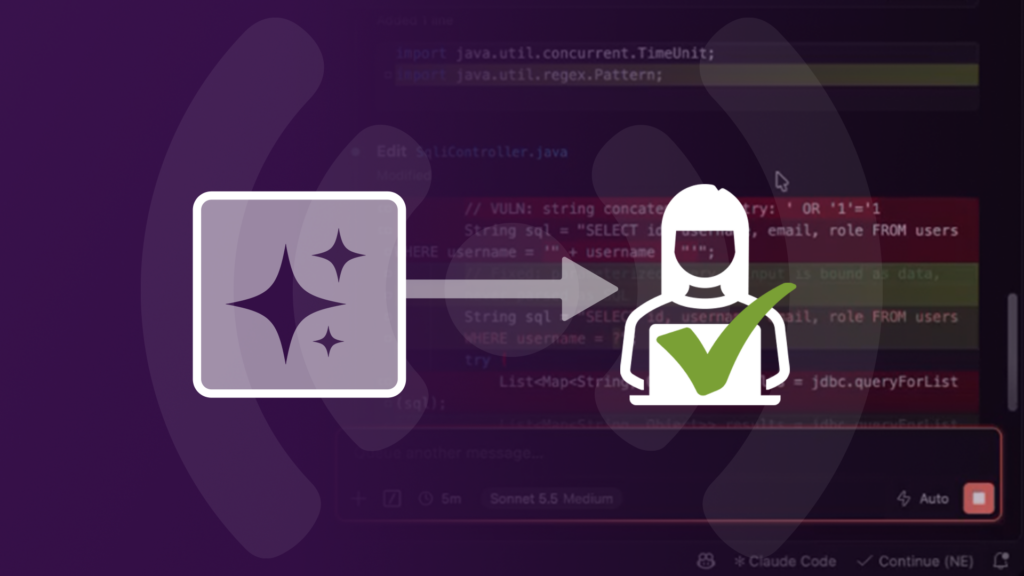
Outpace AI-powered attacks with machine-speed AppSec
Black Duck Signal™ AI agents work as an extension of your security and development teams, autonomously tackling complex AppSec workflows, from deep code analysis to automated remediation, to help you secure your code at the speed of AI.
AI is changing the threat landscape. Are you ready?
AI is accelerating software development and creating more vulnerabilities to manage in less time than ever before. Finding vulnerabilities isn’t enough. You need solutions that help you fix them at the speed and scale of AI.
The codebase is exploding
Vulnerabilities are piling up
Attacks happen faster
Meet your agentic AppSec team
Signal’s AI agents work together to analyze your software for risks and vulnerabilities, prioritize issues by business impact, and implement validated fixes at machine-speed, while keeping the humans in your security and development teams in control at every step.
Signal AI Coding Analysis
Signal Agentic Fix
Signal Threat Analysis
Signal Pen Test
From detection to resolution at AI speed

Works with the tools you use today and tomorrow
Signal integrates with Polaris, Coverity, and Black Duck SCA so you can add AI analysis and agentic remediation to your AppSec program without major changes to your toolchains or pipelines. It also integrates security checks with the AI coding agents your team is adopting.

The consistency of AST. The autonomy of AI
Signal’s hybrid approach combines deterministic SAST and SCA with AI-powered code analysis and workflows into agentic test harnesses that deliver the consistent results for security compliance, with the remediation speed needed to keep pace with AI-driven exploits.

An agentic team with deep security expertise
Signal agents leverage over 20 years of human-validated security expertise assembled in ContextAI™, our curated collection of security skills, rulesets, guardrails, and triage analytics. This intelligence powers security testing, fixes, and validation decisions your team can trust.

Autonomous AppSec that keeps you in control
Signal never changes code without human approval. Developers using Signal with AI coding agents (e.g., Claude Code, GitHub Copilot,) can accept or reject changes as they’re created, while fixes for issues detected in build pipelines are submitted for review as SCM pull requests.
Agentic AI AppSec resources
FAQ
Black Duck Signal™ delivers the power of AI to defend against AI-enabled threats, which are now easily accessible to attackers. As AI lowers the barrier for sophisticated attacks, Signal deploys that same intelligence on the defensive side, identifying vulnerabilities directly within developer workflows, before they can be exploited. Signal also complements deterministic scans by finding classes of issues that traditional, rule-based scanners are not designed to detect, giving your security team broader, deeper coverage without adding headcount or slowing down releases.
Meet your agentic AppSec team
Signal’s AI agents work together to analyze your software for risks and vulnerabilities, prioritize issues based on true business impact, and implement validated fixes at machine speed, while keeping the humans in your security and development teams in control at every step.